
Beginners Guide: How To Change Default Currency In Excel
Mar 28, 2023
Excel picks a currency symbol for you based on where your computer thinks it is. If that is the wrong symbol, or you need euros on one sheet and pounds on another, here is how to change it, in the cells and as the default.
Quick answer: To change the currency in Excel for selected cells, press Ctrl+1, choose Currency under Number, and pick a symbol. To change the default currency in Excel for every new file, change the currency in your Windows Region settings or macOS Language & Region settings, because Excel takes its default from the operating system, not from an Excel option.
Last updated: August 24, 2026
Get our free Excel formulas cheat sheet
Plus new tutorials and template drops. Enter your email and we'll send it over.
Formatting or converting? These are two different jobs.
This page changes how a number looks: swapping the dollar sign for a euro sign leaves the value at 100. It does not apply an exchange rate. It is why a search for how to change euro to dollar in Excel often lands on a formatting page and comes away with nothing useful. If you want to turn 100 euros into the equivalent number of dollars, that is currency conversion and it needs a rate, so read How to Convert Currency in Excel instead.
What this guide covers
Searches land here under a few different names. How to change currency in Excel, how to add currency in Excel and how to set currency in Excel all describe the same job, putting a currency symbol on a selection. Changing the default is a separate job, and it happens outside Excel.
- How to change the currency symbol in Excel (selected cells)
- How to change the default currency in Excel (Windows and Mac)
- Currency format vs Accounting format
- How to add a currency symbol Excel does not list
- Is there a formula to change currency format in Excel?
- Troubleshooting: the symbol will not change
- Quick reference table
- Frequently asked questions
You can also follow us on YouTube for more tips, tricks, and template tutorials.
Read Also: How to Set the Print Area in Excel (Step by Step)
How do you change the currency symbol in Excel?
This is the method most people want when they search how to change currency symbol in Excel, or how to put currency in Excel at all. It changes the symbol on the cells you select and leaves the rest of the workbook alone, so you can change currency in Excel sheet by sheet, or format one column and no others.
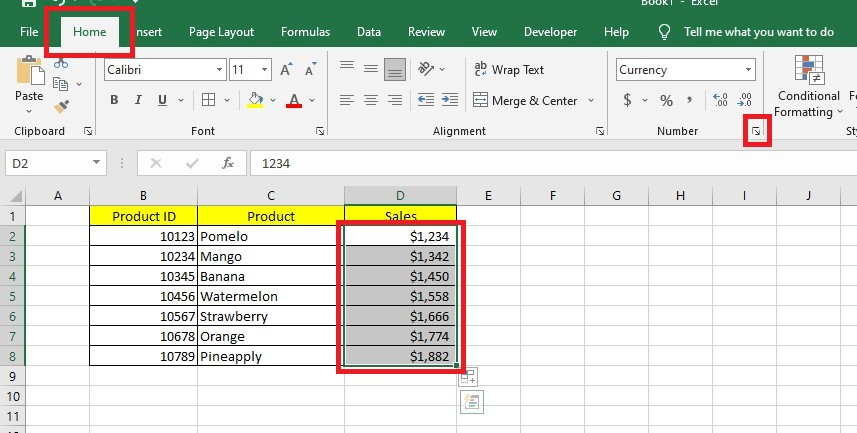
The example below has Product ID, Product List and Sales columns. The Sales column shows a dollar sign on every row, because the dollar sign is this machine's default currency format in Excel.
- Select the cells or the whole column, go to the Home tab, and click the small arrow at the bottom right of the Number group to open the Format Cells dialog. The keyboard shortcut is Ctrl+1.
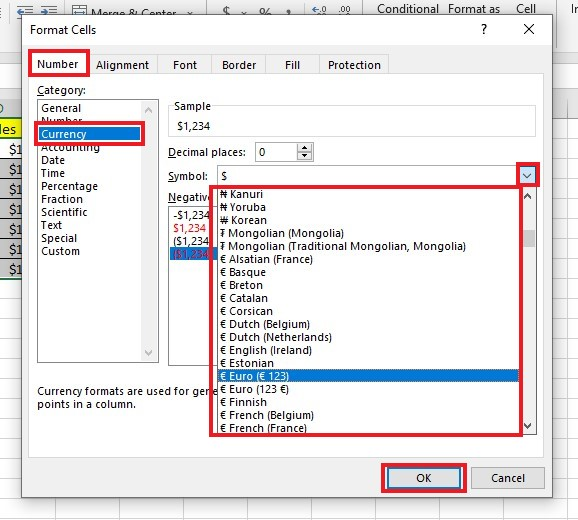
- In the Format Cells dialog, open the Number tab. Under Category, click Currency, then pick a different currency symbol from the Symbol list, for example the euro symbol. Click OK.
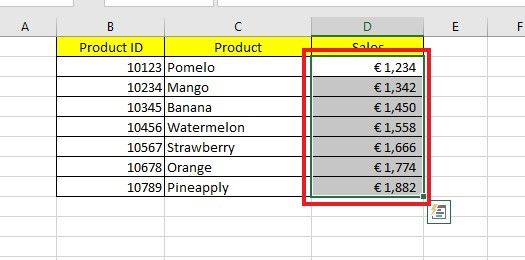
- The dollar symbols are now euro symbols. The underlying numbers have not changed at all, only the way they are displayed.
The rule: the Symbol list in Format Cells is per selection. Use it when you want two currencies in one workbook, and use the Region settings below when you want to change the default currency in Excel for everything you make from now on.
Currency sign and currency symbol mean the same thing here, so these steps also answer how to change currency sign in Excel and how to change the dollar sign in Excel.
This is also the answer to the exam-style question about which ribbon group to use: you change the currency format from the Number group on the Home tab.
Read Also: How to Enable and Use Track Changes in Excel
How do you change the default currency in Excel?
Search results for change default currency in Excel are full of menus to click through. Here is what almost none of them say first: Excel has no default currency setting of its own. There is no box in File > Options that sets it. The Excel default currency comes from your operating system's regional settings, which is why the dollar sign keeps coming back no matter how long you hunt through Excel's menus.
Two consequences worth knowing before you start:
- Changing the regional setting affects new formatting. Cells you already formatted as Currency keep the symbol they were given.
- It is a machine-wide change. It will also change the currency in your other apps.
Method 1: Windows Settings
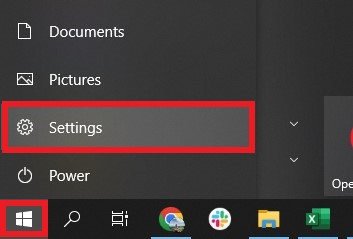
- Click the Windows logo and open Settings.
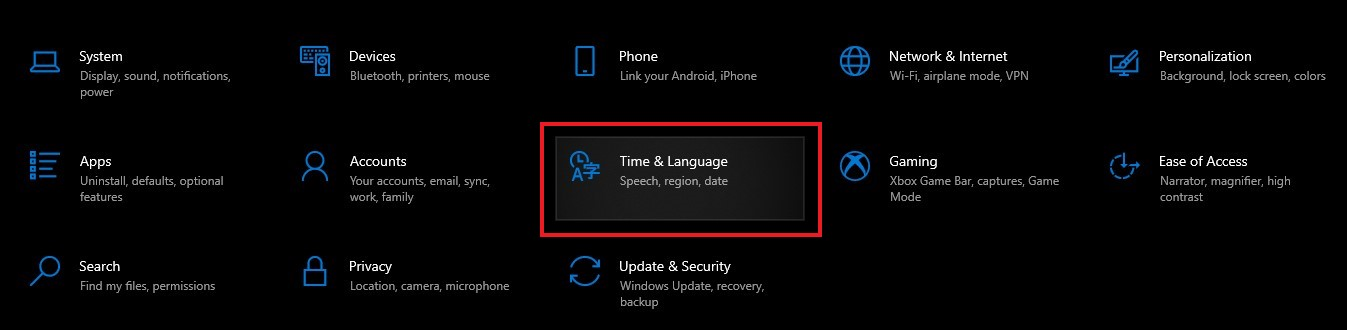
- Click Time & Language.
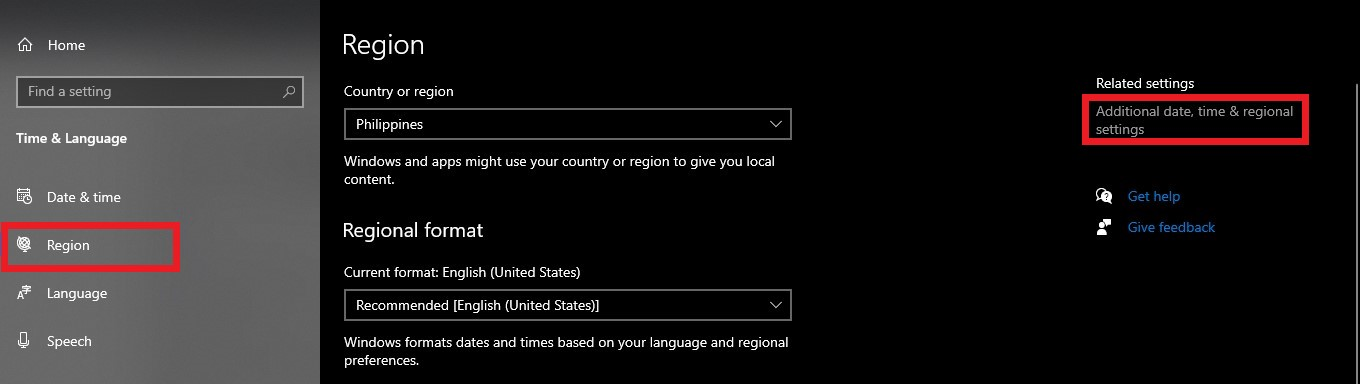
- Select Region, then click Additional date, time, & regional settings. On Windows 11 this section is called Language & region, and the same link sits under Related settings as Administrative language settings. Either one opens the same classic dialog.
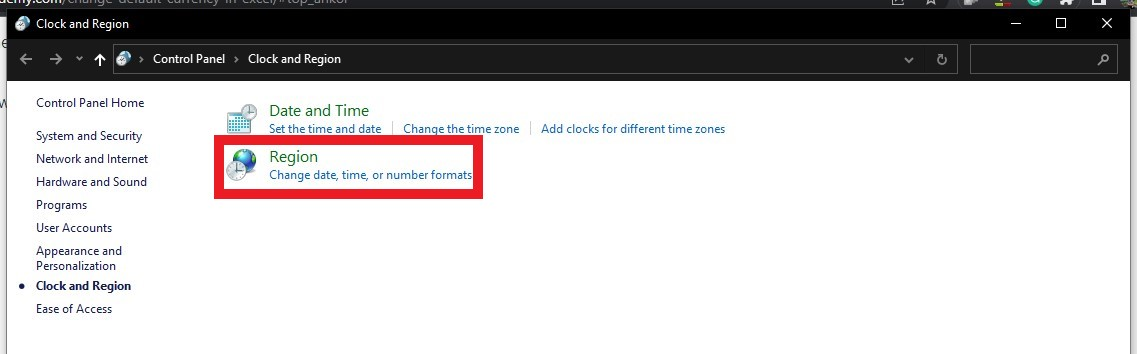
- Click Region.
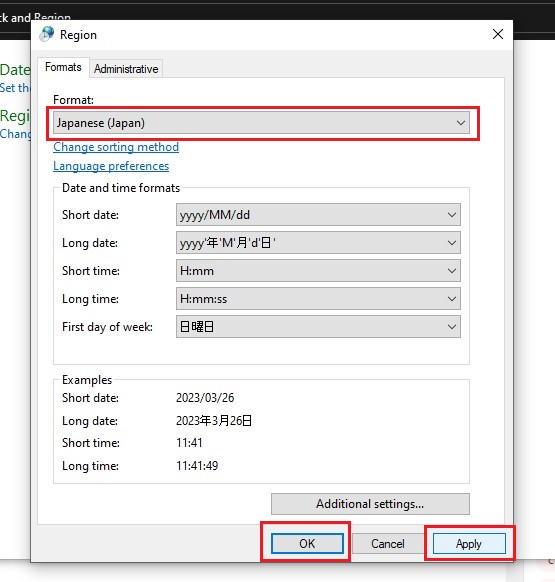
- Choose a Format, then click Apply and OK.
- Open Excel, go to the Home tab, and pick Accounting or Currency from the Number group. The new regional symbol is applied, in this case the yen symbol.
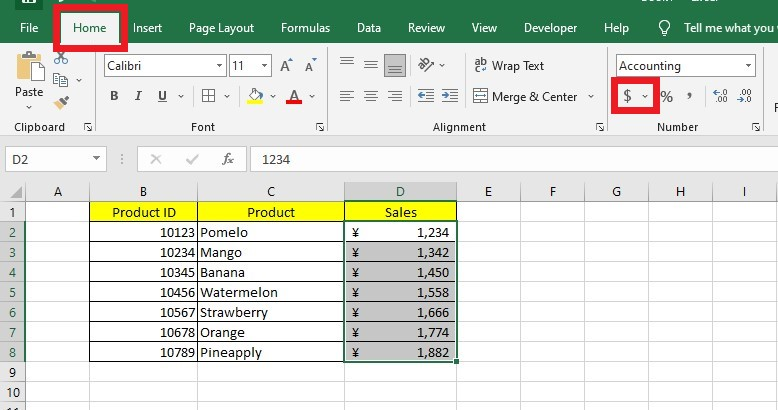
If the symbol has not changed, close Excel completely and reopen it so it picks up the new regional setting.
Read Also: How to Sum a Column in Google Sheets
Method 2: Control Panel (changes the symbol only)
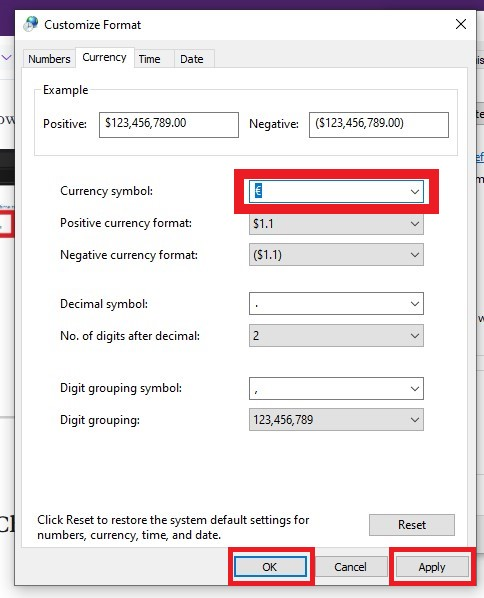
This route is worth knowing because it does something Method 1 cannot: it changes only the currency symbol and leaves your date format, number separators and language alone. The steps are unchanged on Windows 10 and Windows 11.
- Search for and open the Control Panel.

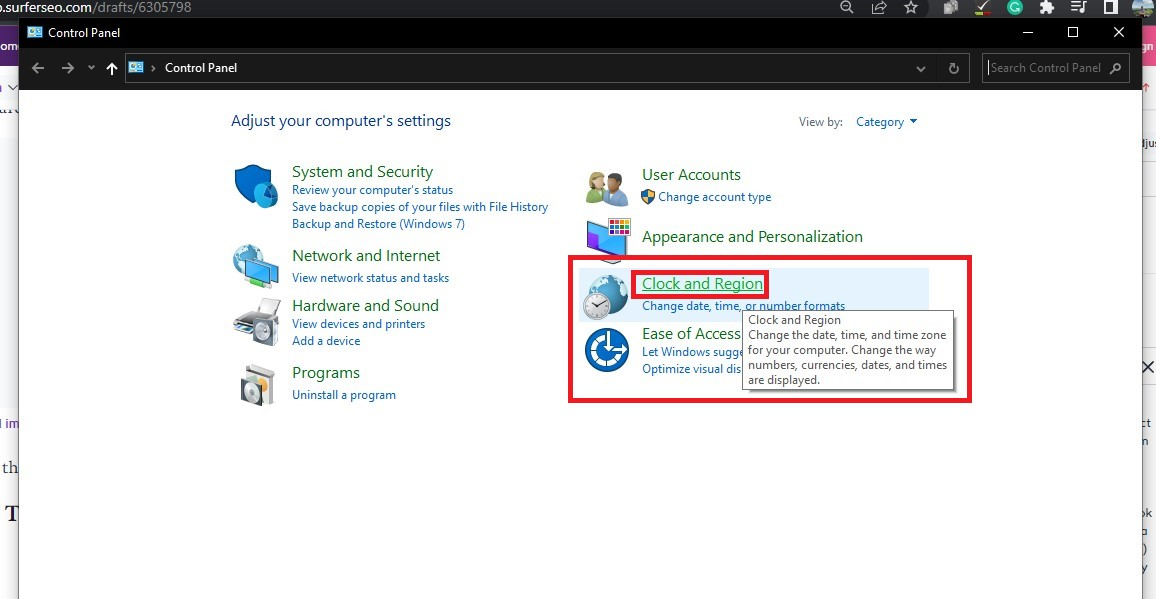
- Click Clock and Region.
- Click Region, then Additional settings.
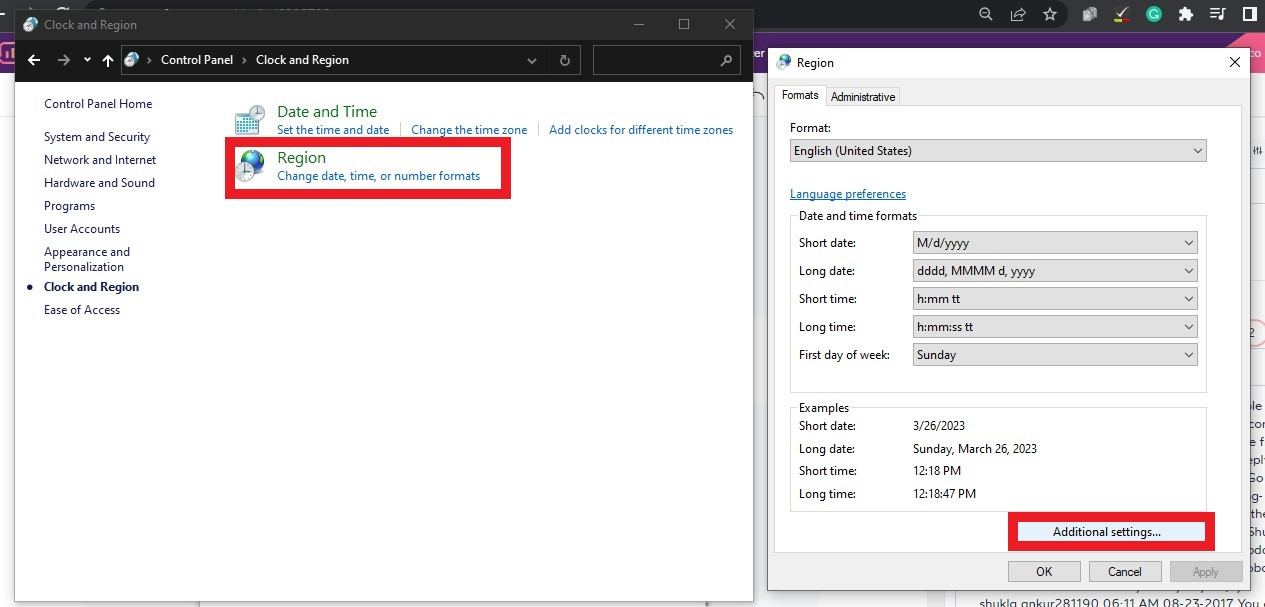
- Open the Currency tab, pick a symbol from the Currency symbol dropdown, and click Apply then OK.
How to change the default currency in Excel on Mac
Same principle, different place. Excel for Mac takes its default currency from macOS, so open System Settings > General > Language & Region and use the advanced options there, where currency can be set separately from the region itself. On older versions this is System Preferences > Language & Region > Advanced.
Inside Excel for Mac itself, the per-cell method is identical: select the cells, press Command+1, choose Currency, and pick the symbol you want. That works regardless of what macOS is set to.
Read Also: How to Add a Trend-line in Excel Online
Currency format vs Accounting format in Excel
The Excel currency format and the Excel accounting format both put a symbol on a number, and Format Cells offers them side by side, so it is worth knowing which one you actually want.
| Behaviour | Currency format | Accounting format |
|---|---|---|
| Where the symbol sits | Directly in front of the number | Pinned to the left edge of the cell, so symbols line up down a column |
| Decimal alignment | Follows the number | Decimal points align down the column |
| How zero appears | As a zero amount | As a dash |
| How negatives appear | Your choice: minus sign, red, or parentheses | In parentheses |
| Best for | A single figure in the middle of a sheet | A column of money in a report or statement |
The rule: use Accounting when money runs down a column and you want it to line up, use Currency everywhere else.
How to add a currency symbol Excel does not list
The Symbol dropdown is long but not complete, and it will not help if you want, say, a plain R for rand or a symbol your locale does not offer. Use a custom number format instead.
- Select the cells and press Ctrl+1.
- Under Category, click Custom.
- In the Type box, put the symbol in double quotation marks in front of the number code. For example, type "R"#,##0.00 to show R1,234.56.
- Click OK.
That is how to add rand currency in Excel, and any other symbol the dropdown leaves out. The quotation marks tell Excel that the character is literal text and not a formatting code. The same pattern works for a suffix: #,##0.00" kr" puts the symbol after the number instead.
A useful trick if you get stuck: pick the closest currency from the built-in Currency list first, then reopen Format Cells and click Custom. Excel shows you the format code it just built, and you can edit that rather than writing one from scratch. Microsoft documents the full set of codes in Number format codes.
Is there a formula to change currency format in Excel?
If you searched how to change currency format in Excel using formula, this is the section. Sort of, and the caveat matters more than the formula. You can use the TEXT function to produce a value that displays with a currency symbol:
=TEXT(A2,"€#,##0.00")
If A2 holds 1234.5, that returns €1,234.50.
The rule: TEXT does not change a cell's format, it produces text. The result looks like money but Excel now treats it as a string, so SUM will ignore it and you cannot do arithmetic on it.
So use TEXT when you are building a label, a report title or a concatenated sentence, for example ="Total: "&TEXT(B10,"€#,##0.00"). For anything you need to add up, format the cells with Ctrl+1 and leave the values as numbers.
Troubleshooting: the currency symbol will not change
| Symptom | Cause | Fix |
|---|---|---|
| You changed the Windows region but old cells still show the old symbol | Regional changes apply to new formatting, not cells already formatted | Reselect those cells and reapply the format with Ctrl+1 |
| Nothing changes anywhere after a region change | Excel was open when you changed the setting | Close Excel completely and reopen it |
| The symbol appears but the number will not add up | The value is text, often from a TEXT formula or a paste from the web | Retype it as a number, or use VALUE, then format with Ctrl+1 |
| The symbol you need is not in the Symbol list | It is not part of any built-in locale format | Use a custom format such as "R"#,##0.00 |
| The whole column shows hashes | The column is too narrow for the formatted number | Double-click the column border to autofit |
| You wanted the amount converted, not just relabelled | Formatting never applies an exchange rate | See How to Convert Currency in Excel |
Quick reference: every way to set currency in Excel
| What you want | Where to do it | Scope |
|---|---|---|
| Change currency in Excel for selected cells | Ctrl+1 > Number > Currency > Symbol | The selection only |
| Add currency in Excel fast, with the default symbol | Home tab > Number group > the currency button | The selection only |
| Set default currency in Excel for every new file | Windows Region settings, or macOS Language & Region | Every app on the machine |
| Change only the symbol, not dates or separators | Control Panel > Clock and Region > Region > Additional settings > Currency | Every app on the machine |
| A symbol Excel does not offer | Ctrl+1 > Custom > "R"#,##0.00 | The selection only |
| A currency symbol inside a sentence or label | =TEXT(A2,"€#,##0.00") | One formula, returns text |
| Convert an amount at an exchange rate | Not a formatting job, see the conversion guide | n/a |
Final thoughts on how to change the default currency in Excel
The single idea that makes all of this click: the symbol is display, the number underneath never changes. Format Cells handles one sheet, the Region settings handle the machine, and a custom format handles anything the list leaves out. If what you actually needed was to apply an exchange rate, that is a different job, and the conversion guide linked above is the one you want.
For more easy-to-follow Excel guides and the latest Excel Templates, visit Simple Sheets and the Related Articles section below. Subscribe to Simple Sheets on YouTube for the most straightforward Excel video tutorials. If you would rather start from a sheet that is already built, our data analysis-ready templates are in the catalog.
Frequently asked questions about changing currency in Excel
Can I use multiple currency symbols in the same spreadsheet?
Yes. Currency formatting is applied per cell, so select one column and format it in euros, select another and format it in pounds. Nothing about the workbook is locked to a single currency. Just remember the symbol is only a label, so do not add a euro column to a dollar column and expect a meaningful total.
How can I automatically change the currency in Excel?
Excel will not swap symbols on its own. The closest thing to automatic is to set the currency once in your Windows or macOS regional settings, so every new file you format picks it up without you choosing a symbol each time. Within an existing file, select the cells and apply the format with Ctrl+1.
Is there a formula for changing the currency in Excel?
Use =TEXT(A2,"€#,##0.00"), which returns the value in A2 displayed with a euro symbol and two decimal places. Be aware that TEXT returns a text string, not a number, so the result cannot be summed. Use it for labels, and use Ctrl+1 formatting for anything you need to calculate with.
Why does Excel keep changing my currency back to dollars?
Because the default comes from your operating system, not from Excel. Excel has no default currency option of its own. Change it in the Windows Region settings or macOS Language & Region settings, then close and reopen Excel.
How do I change the dollar sign to a peso sign in Excel?
Select the cells, press Ctrl+1, choose Currency, and pick the peso from the Symbol list. If the exact peso symbol you need is not listed, choose Custom instead and type a format such as "₱"#,##0.00 with the symbol in double quotation marks.
Does changing the currency symbol convert the amount?
No. Changing the symbol from $ to € leaves the value at 100, it does not turn 100 dollars into 92 euros. Converting needs an exchange rate and a multiplication, which is covered in our guide to converting currency in Excel.
Related Articles:
How to Convert Currency in Excel
Want to Make Excel Work for You? Try out 5 Amazing Excel Templates & 5 Unique Lessons
We hate SPAM. We will never sell your information, for any reason.

